
Sailing into the Future: Marine Thermal Imaging Redefines Safety, Security, and Operational Efficiency
The vast and unforgiving maritime environment presents a unique set of challenges. From navigating treacherous waters in the dead of night to ensuring the security of critical infrastructure and optimizing complex engineering systems, maritime operators require a constant, vigilant eye. Traditional visual inspections and standard radar have limitations, particularly in low-visibility conditions.
Now, high-resolution marine thermal imaging cameras are transforming the maritime landscape, providing an indispensable new layer of perception that visualizes the invisible. This technology, once primarily the domain of defense, is rapidly becoming a standard tool for enhancing safety, security, and operational efficiency across the global shipping and offshore sectors.
Nighttime Navigation and Enhanced Situational Awareness
The ability to see clearly at night is paramount for safe navigation. While radar provides distance and bearing, it can miss small objects or present cluttered, ambiguous echoes. Thermal imaging cameras detect the subtle heat signatures of objects against the uniform temperature of the water, creating a sharp, real-time visual map that radar cannot replicate.
This provides critical situational awareness, allowing captains and navigators to clearly visualize navigation aids, other vessels, icebergs, flotsam, and shorelines, even in absolute darkness or thick fog. “Thermal imaging doesn’t just show us what’s there; it shows us the thermal fingerprint,” says Captain Alistair Finch, a maritime safety expert. “It gives us that extra, high-definition visual confirmation that can make all the difference, especially when maneuvering in a busy harbor at night.”
Life-Saving Capabilities in Search and Rescue
Time is the enemy in Maritime Search and Rescue (SAR) operations. Traditional visual searches are often hampered by darkness, rough seas, and vast search areas. Because a person’s core body temperature is significantly different from the cold water or nighttime air, they stand out as a bright, unmistakable thermal signature.
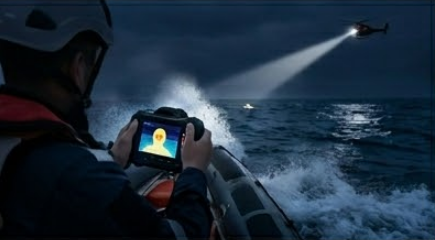
The high sensitivity of modern marine thermal cameras allows SAR teams to quickly visualize people in the water, even when they are obscured by waves or distance, significantly speeding up the critical detection phase of a rescue mission and maximizing the window for a successful recovery.
Predictive Engine and Machinery Maintenance
The engine room is the mechanical heart of any vessel. Complex systems including main engines, generators, turbines, and electrical cabinets must operate flawlessly 24/7. Contact sensors can provide point readings, but they cannot show the distribution of heat across a large component. Localized hot spots are often the first sign of an impending catastrophic failure.
By incorporating thermal imaging into a predictive maintenance program, engineers can perform non-contact, “through-the-lagging” visual inspections in real-time. This allows them to identify hot spots on bearings, failing cylinders, or loose electrical connections before they lead to a catastrophic equipment failure or an electrical fire, preventing expensive repairs and unscheduled downtime on the high seas.
Anti-Piracy, Maritime Security, and Environmental Monitoring
In high-risk areas, the ability to detect and track threats is vital. Standard radar can miss small, fast-moving skiffs used in piracy or smuggling, particularly in heavy weather. Fixed marine thermal sensors can continuously scan the surrounding waters 24/7, long before a threat can close with the vessel.
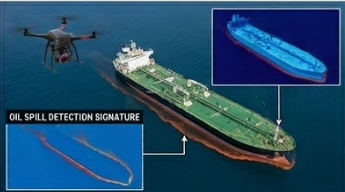
Furthermore, networked thermal systems can provide early warning for vessel-on-vessel or vessel-on-platform collisions, and are increasingly being deployed for environmental monitoring, instantly visualizing invisible oil spills by detecting the thermal boundary layer between the oil and the surrounding water.