Thermal Imaging: A Game-Changer for Modern Chemical Processing
In the complex environment of chemical manufacturing, maintaining precise temperature control is not just a matter of product quality—it is a critical safety requirement. Thermal imaging cameras have evolved from simple diagnostic tools into essential components of continuous monitoring and predictive maintenance frameworks within the chemical industry.
1. Real-Time Monitoring of Exothermic Reactions
Many chemical syntheses are exothermic, releasing significant heat that can lead to “runaway reactions” if not managed. Traditional contact sensors (like thermocouples) only measure temperature at a single point. In contrast, thermal cameras provide a complete visual map of a reactor vessel, allowing engineers to identify localized “hot spots” that internal sensors might miss.
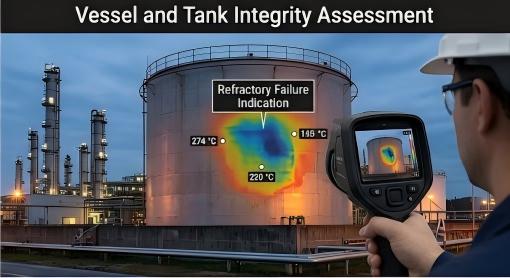
2. Vessel and Tank Integrity Assessment
Chemical reactors and storage tanks are often lined with refractory material or specialized coatings to withstand corrosive substances and high temperatures. Over time, this lining can degrade. Thermal imaging enables “through-the-wall” monitoring; by detecting anomalies in the surface temperature of a vessel, operators can identify internal refractory failure or sediment buildup without shutting down the system.
3. Leak Detection and Hazardous Material Management
Leakage in a chemical plant can be catastrophic. Thermal cameras are highly effective at detecting leaks of gases or liquids that are otherwise invisible to the human eye. Because leaking fluids often undergo a pressure change or have a different thermal signature than the surrounding pipes, infrared technology can pinpoint the exact source of a breach, even from a safe distance.
4. Improving Energy Efficiency in Distillation and Heat Exchange
Distillation columns and heat exchangers are energy-intensive units. Thermal inspections can reveal “short-circuiting” in heat exchangers or insulation gaps in steam lines. By optimizing the thermal boundary conditions identified through infrared data, chemical plants can significantly reduce their carbon footprint and operational costs.
5. Enhanced Fire and Explosion Prevention
In environments where volatile organic compounds (VOCs) are present, the risk of fire is constant. Thermal imaging systems integrated with automated alarms can detect abnormal temperature rises in electrical cabinets, pump bearings, or conveyor belts long before a spark occurs, providing a crucial window for preventative intervention.
Conclusion
As the chemical industry moves toward “Industry 4.0,” the integration of smart infrared sensors is becoming the standard. By providing a non-contact, 24/7 visual solution for temperature monitoring, thermal imaging ensures that chemical enterprises can operate at peak efficiency while maintaining the highest possible safety standards for their workforce and the environment.